
How IATF16949 Standards Define Syac as a Quality-Driven China OEM Forged Wheels Manufacturer
GUANGYUAN, SICHUAN, CHINA, October 26, 2026 /EINPresswire.com/ -- Evaluating Automotive Quality Management Systems in
Press Release Disclaimer: This is a press release distributed through the XPR Media network. It has not been independently verified by our newsroom.

GUANGYUAN, SICHUAN, CHINA, October 26, 2026 /EINPresswire.com/ — Evaluating Automotive Quality Management Systems in Modern Component Sourcing
In the global automotive supply chain, assessing factory capabilities depends on standardized operational metrics and objective quality frameworks rather than marketing claims. International alloy wheel distributors, regional automotive dealers, and commercial brand managers require reliable manufacturing partners capable of meeting strict safety and dimensional tolerances. Among global quality frameworks, the IATF 16949 standard stands as the benchmark quality management system across the automotive industry. Formulated by the International Automotive Task Force, this standard establishes strict requirements for process control, defect prevention, continuous improvement, and material traceability.
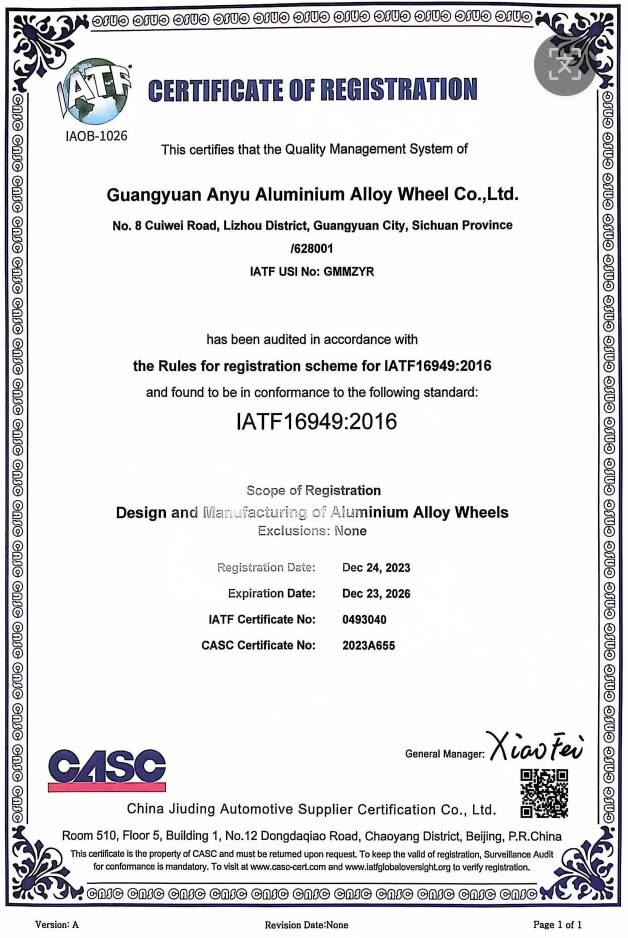
Evaluating how a manufacturing plant executes these technical requirements provides buyers with clear insight into real-world production consistency. Operating as a China OEM forged wheels manufacturer involves far more than simply housing advanced multi-axis CNC machines or automated painting lines. It requires a disciplined organizational framework that replicates exact technical specifications across every order batch. As an established forged wheels manufacturer, Guangyuan Anyu Aluminium Wheel Co., Ltd., (Syac), relies on the IATF 16949 quality framework to structure its engineering workflows, material verification steps, dynamic testing routines, and export operations.
Integrating IATF 16949 Quality Architecture with Daily Plant Workflows
Integrating IATF 16949 standards into daily plant operations requires translating overarching quality management principles into repeatable factory floor procedures. Rather than treating certification as a static credential, effective quality implementation embeds verified control points directly into raw material procurement, mechanical processing, surface coating, and customer engineering change protocols.
At Guangyuan Anyu Aluminium Wheel Co., Ltd., technical routines follow documented procedures long before mechanical turning begins. Every incoming wheel program undergoes an initial engineering review, where vehicle fitment requirements, wheel load ratings, pitch circle diameter dimensions, offset tolerances, and center bore clearances are verified and logged into master production files. If design modifications occur during development, formal engineering change request procedures prevent miscommunications between technical teams and shop floor operators.
Quality documentation remains accessible throughout production, allowing technical auditors and international purchasing agents to trace raw material certificates, batch inspection reports, and machine parameter logs. This structured operational methodology enables Syac to maintain clear operational boundaries, offering commercial buyers verified documentation rather than subjective performance promises.
Technical Control Points Across the OEM Forged Wheel Manufacturing Cycle
Producing high-integrity custom and OEM forged wheels involves specific physical manufacturing stages, with each phase presenting distinct mechanical or dimensional control requirements. Standardized quality systems ensure these engineering parameters remain closely monitored across large-scale production runs.
1. Forged Blank Sourcing and Material Consistency
Structural integrity in a finished wheel depends directly on raw material quality. Syac sources high-density 6061-T6 aluminum forged blanks, conducting strict material composition and grain structure inspections before machining commences. Ensuring uniform grain flow throughout the forged blank eliminates internal porosity and structural micro-voids, creating a solid physical foundation capable of enduring severe dynamic loads.
2. Precision CNC Machining and Dimensional Accuracy
After passing initial material verification, raw forged blanks move to multi-axis CNC lathes and milling stations for rough turning, contour shaping, spoke profiling, and bolt hole drilling. Critical mounting surfaces, hub bore dimensions, and back-pad clearances follow digital CAD models closely to ensure accurate vehicle fitment. Automated probe systems measure key dimensional coordinates during machining to prevent cumulative manufacturing variances.
3. Structural Testing, Dynamic Balance, and Runout Verification
Machined wheel structures undergo rigorous mechanical evaluation to confirm physical durability. Bending fatigue tests, dynamic radial fatigue checks, and 13-degree impact tests simulate long-term operational stress under varied road conditions. Concurrently, dynamic balance and radial runout measurements verify rotational symmetry. Detecting and correcting minor runout variances during production prevents steering vibration on finished vehicle assemblies.
4. Surface Preparation, Multi-Layer Coating, and Finish Inspection
Following mechanical validation, wheel structures transition to surface preparation and finishing bays. Available finishing options, including full gloss painting, tinted clear coats, brushed metal textures, and precision-machined faces, receive multi-layer protective coatings. Finished components undergo thorough visual evaluations, paint thickness measurements, and coating adhesion tests under standardized lighting inspection booths.
5. Protective Packaging and Comprehensive Traceability Logs
The final manufacturing phase focuses on shielding pristine wheel finishes during international transit. Protective rim edge guards, cloth face covers, plastic film wrap, and heavy-duty corrugated packaging boxes protect finished products against freight handling damage. Serialized product labels link each shipped unit directly back to its original aluminum billet batch, machining log, and final inspection report.
Practical Commercial Value and Operational Boundaries for Overseas Buyers
For international brand managers, regional wholesale importers, and specialized automotive tuning brands, partnering with an IATF 16949-compliant supplier offers distinct commercial advantages:
Consistent Batch Precision: Standardized manufacturing procedures minimize batch-to-batch structural and cosmetic variations, ensuring reordered wheel fitments match initial sample approvals.
Simplified Technical Auditing: Transparent inspection records allow overseas engineering teams to complete vendor evaluations efficiently without extensive factory visits.
Reduced Delivery Disruptions: Rigorous inline quality checkpoints prevent mid-production rejections, keeping scheduled shipping timelines on track.
While systematic process controls substantially reduce operational risks, maintaining objective technical expectations remains essential. Quality management systems establish consistent manufacturing parameters, but they do not alter the physical limits of aluminum alloys or make components immune to severe roadway impacts. Recognizing these operational boundaries allows distributors and manufacturing partners to build durable, transparent, and long-term commercial relationships.
Structuring Reliable Global Wheel Supply Partnerships
The global automotive aftermarket continues to prioritize clear technical communication, verifiable quality documentation, and dependable manufacturing practices. As international buyers navigate complex global supply chains, structured quality management frameworks remain the most reliable standard for vendor selection. Through disciplined adherence to IATF 16949 guidelines, Guangyuan Anyu Aluminium Wheel Co., Ltd. delivers consistent OEM forged wheels designed to satisfy international market requirements.
Professional wheel buyers, automotive distributors, and commercial fleet operators seeking specialized wheel manufacturing partnerships can explore technical specifications, review available quality certificates, or discuss custom project requirements directly through the official website: https://syacwheels.com/
Syac
Syac
Legal Disclaimer:
EIN Presswire provides this news content “as is” without warranty of any kind. We do not accept any responsibility or liability
for the accuracy, content, images, videos, licenses, completeness, legality, or reliability of the information contained in this
article. If you have any complaints or copyright issues related to this article, kindly contact the author above.

Media gallery

